

At first glance, one might think of STEM and arts education as polar opposites; right brain versus left brain, analytical versus creative. But in practice, breakthroughs in science rely on creativity and design thinking, while the arts are advanced through technological innovation and engineering design. As a result, the line separating STEM and arts education is getting blurred as today’s economy is filled with careers that demand both analytical and creative skills, such as computer programming, video game design, mechanical engineering, and of course, architecture. It’s this powerful intersection, where science, technology, engineering, arts, and mathematics converge, that many now define as STEAM.
At TLCD, we design learning environments that enhance the educational experience across STEM and arts disciplines. The design itself becomes an integral teaching and community building tool – transparency reveals art-making and experimentation in action, collaboration zones encourage cross-disciplinary intermingling, and campus beacons serve as hubs where academia, industry, and the community converge. The three projects featured below reveal how thoughtful design unites STEM and the arts to create distinctive places that anchor campus identity and invite community engagement for the betterment of educational outcomes.
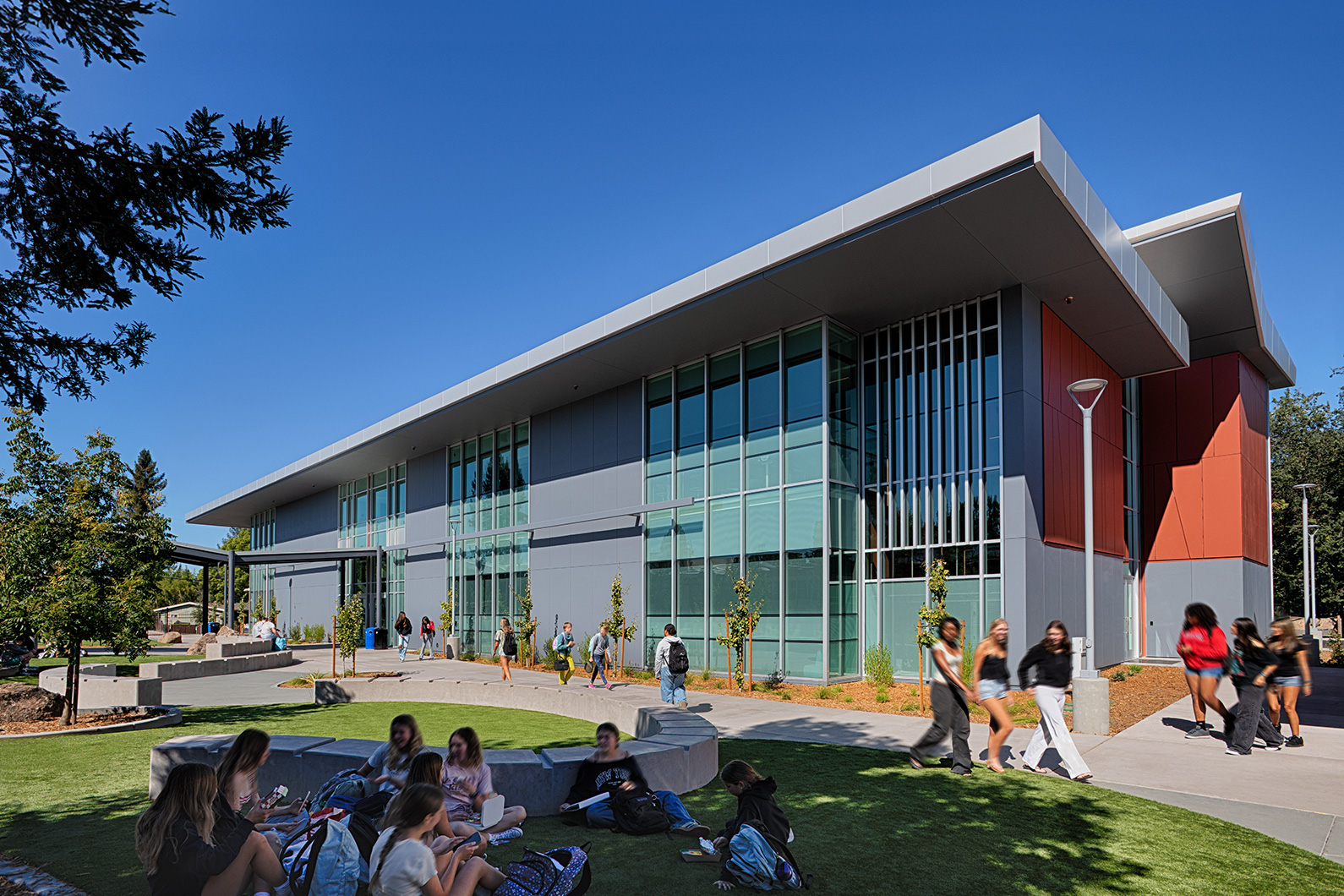
Montgomery High School:
A New Building for a School in Transition
TLCD has partnered with the Santa Rosa City Schools District for many years, completing numerous projects on the Montgomery campus. The new High School Classroom Building continues this collaboration with a design that honors the school’s original architectural character while introducing a forward-looking vision for 21st Century learning.
Replacing outdated portable classrooms, the new building is strategically positioned along the campus’s main circulation axis, seamlessly connecting outdoor pathways with interior learning spaces. This connection reinforces the idea that learning happens everywhere; classrooms, corridors, and courtyards alike.
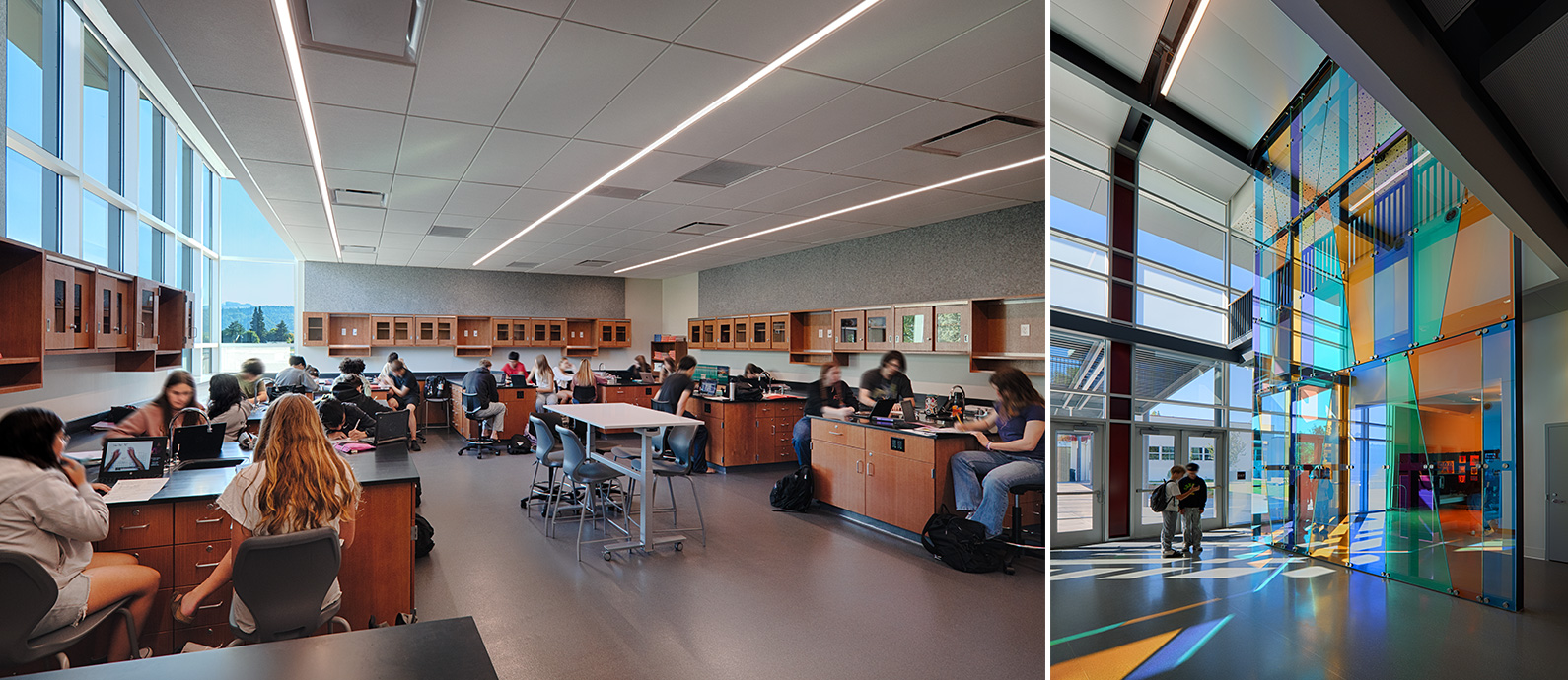
Second floor science labs provide flexible environments that support inquiry-based learning, experimentation, and interdisciplinary collaboration. Abundant daylight and expansive views of the Sonoma County hills inspire curiosity and creativity – the very qualities that lie at the heart of STEAM learning.
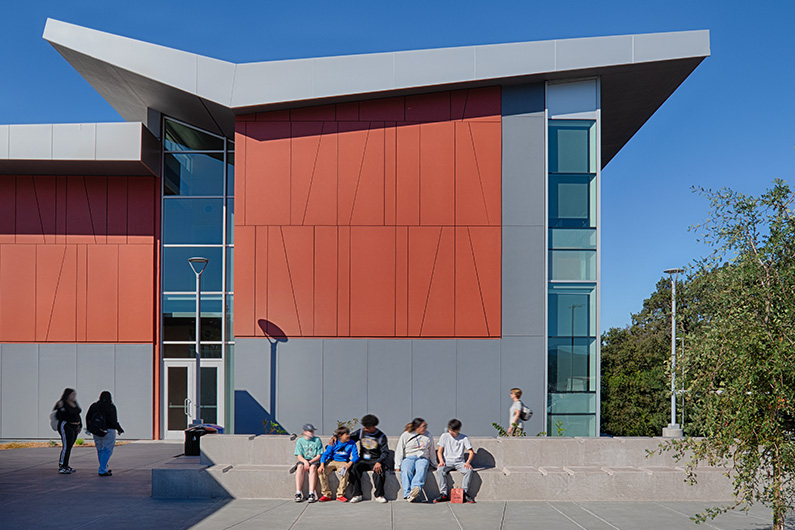
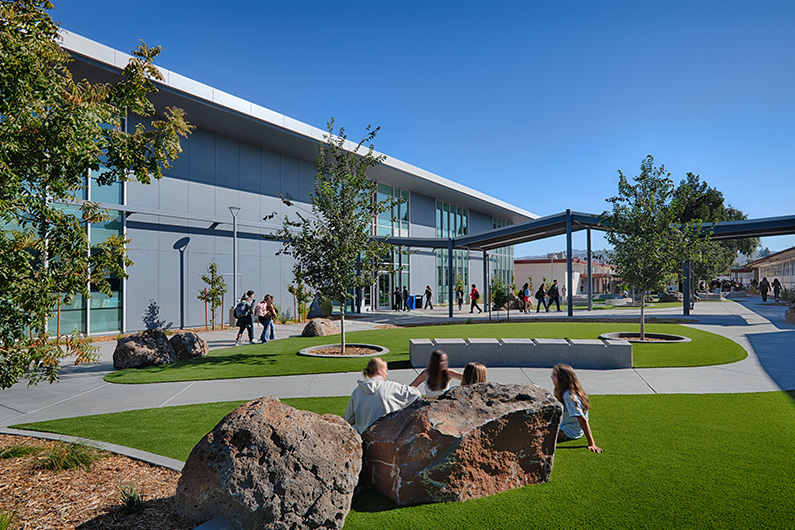
Since welcoming students in August of this year, the building has quickly become a vibrant hub of campus life. With high school and middle school students sharing the site, the new quad functions as an outdoor classroom and social commons – a place where students gather, collaborate, and experience the interconnectedness of science, technology, engineering, art and design in their everyday environment.
Working with the team at TLCD has been a great experience. They have transformed an old portable village into a wonderful new classroom building where young minds will be shaped. I appreciate TLCD’s dedication to this project.
Erik Oden, Executive Director Facilities, Maintenance and Operations
Santa Rosa City Schools
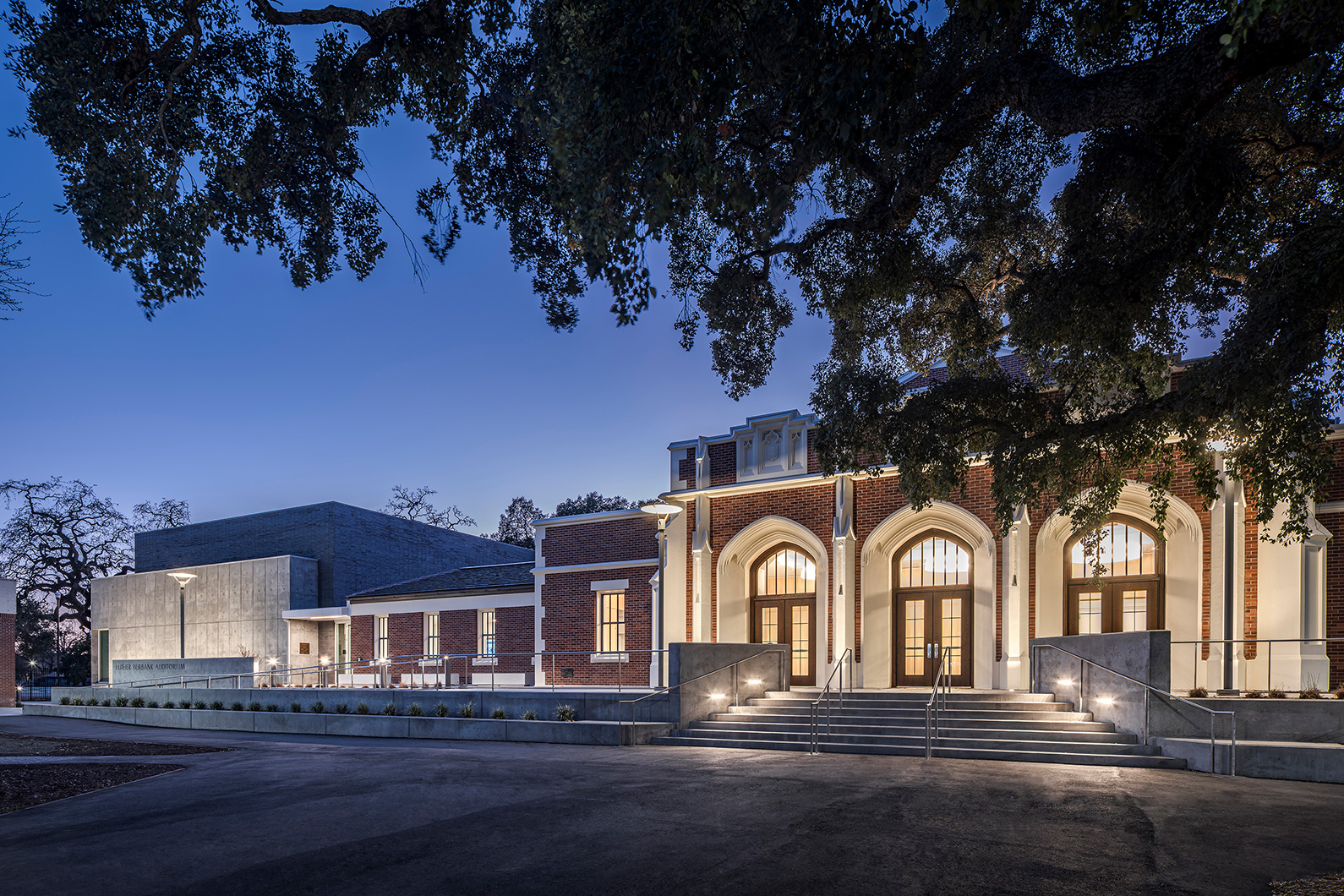
SRJC Burbank Auditorium:
Revitalizing a Heritage Venue for Performing Arts Education
The Burbank Auditorium at Santa Rosa Junior College has long been a cherished landmark in Sonoma County, welcoming generations of families to enjoy lectures, performances, and community gatherings in its main theater. The project aimed to provide a refined and enlarged, modern home for local performing arts. With its 1939 historic character lovingly preserved, the Burbank Auditorium remains a vibrant hub where the arts, education, and community intersect and inspire new and old audiences.
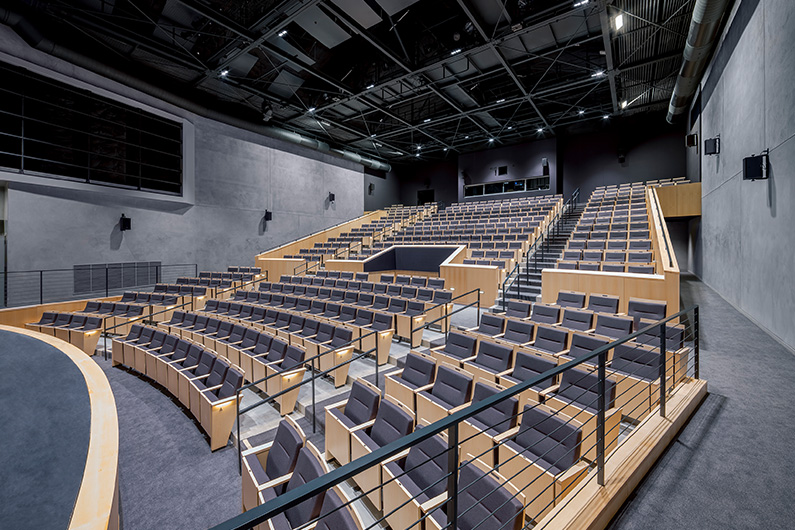
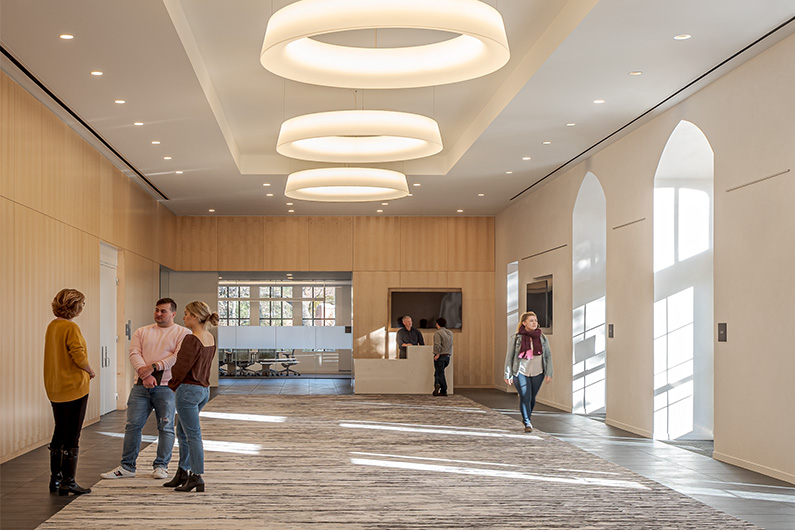
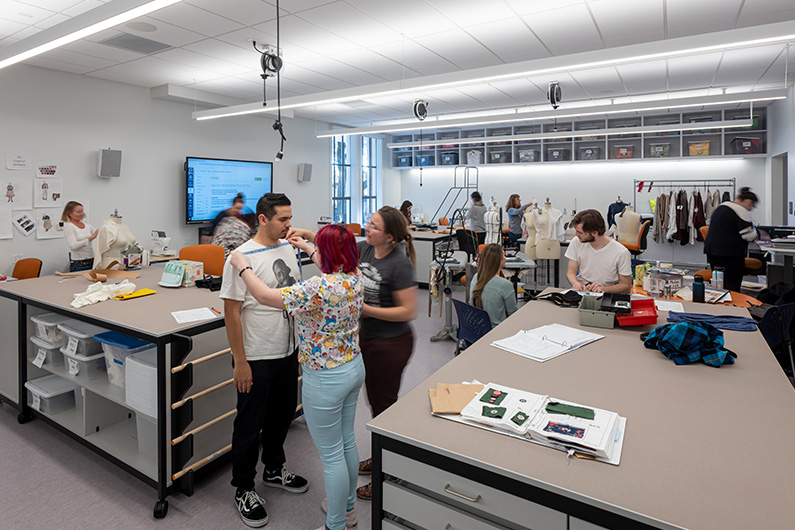
In addition to supporting drama and dance performance, Theater Arts students gain practical backstage experience in the art of making using modern tools of the trade to transform ideas into tangible experiences through set design, construction, performance make-up, and costuming. The addition of a 200-seat studio theater expands opportunities for students to experiment with diverse staging and performance styles supporting creativity and innovation. Beyond theater, the space also serves as a versatile venue for lectures and artistic exploration across other SRJC programs, fostering a campus-wide culture of creativity.
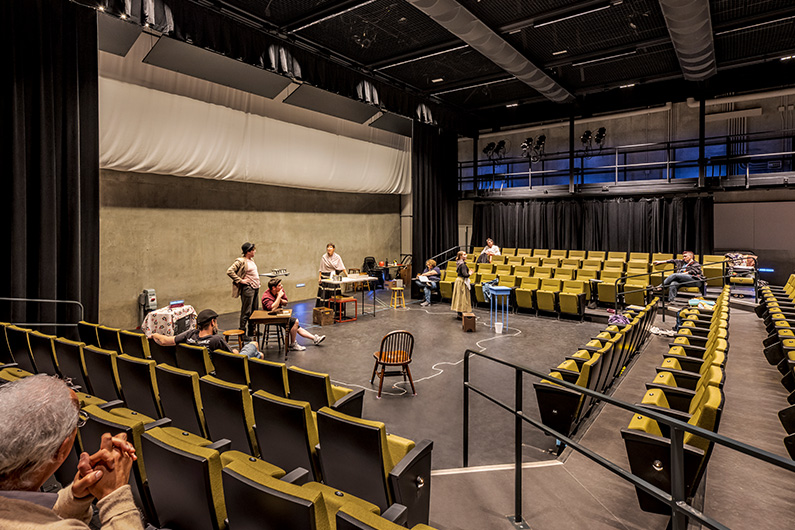
TLCD is proud to have been part of the team that transformed the Burbank Auditorium into a state-of-the art home for the Theater Arts program, a striking centerpiece for the Santa Rosa Junior College campus, and a community treasure.
The complete renovation of the historic Burbank auditorium transformed the building from a 1930’s era design into a multi-venue state-of-the-art entertainment facility for both small and large productions. Audience sightlines and acoustics were upgraded along with the addition of an intimate black box theatre. The lobby and restrooms were enlarged, and teaching facilities were all improved. The result is a complex technological masterpiece that honors the history of the college.
Kerry Loewen, Dean of Arts & Humanities/Director of Study Abroad
Santa Rosa Junior College
 West Valley College Visual Arts Building:
A Vibrant Campus Hub for the Arts
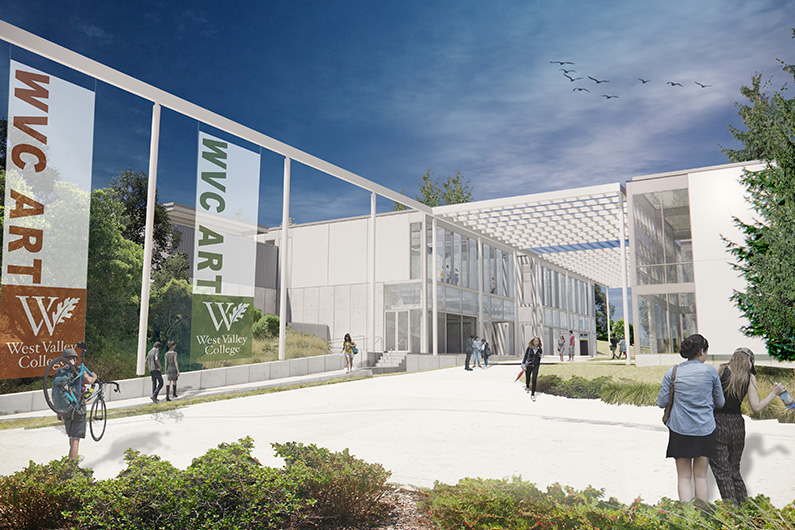
The Visual Arts Building at West Valley College’s Cilker School of Art and Design serves as a dynamic center for creativity and community. Five spacious, daylight-filled art studios surround a central courtyard anchored by a majestic heritage oak. Designed to foster a seamless connection to the outdoors, each studio features expansive glass sliding curtain walls that open directly to the courtyard, encouraging movement, experimentation, and inviting art and artists to flow freely between indoor and outdoor spaces.
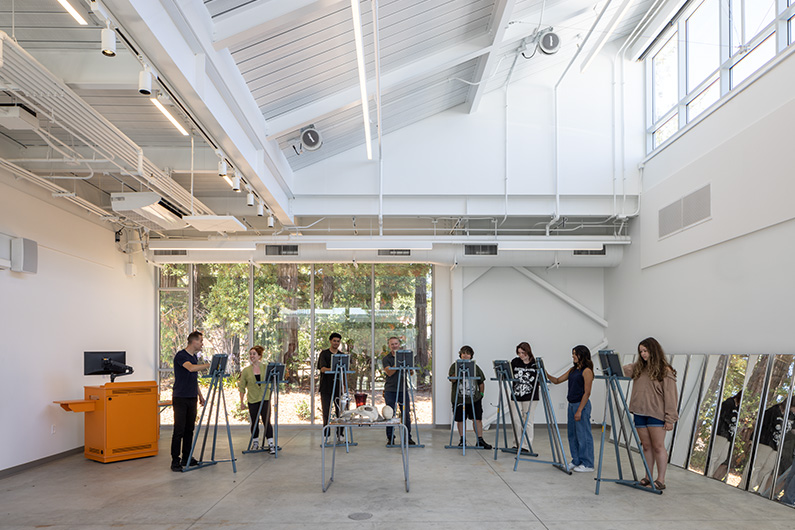
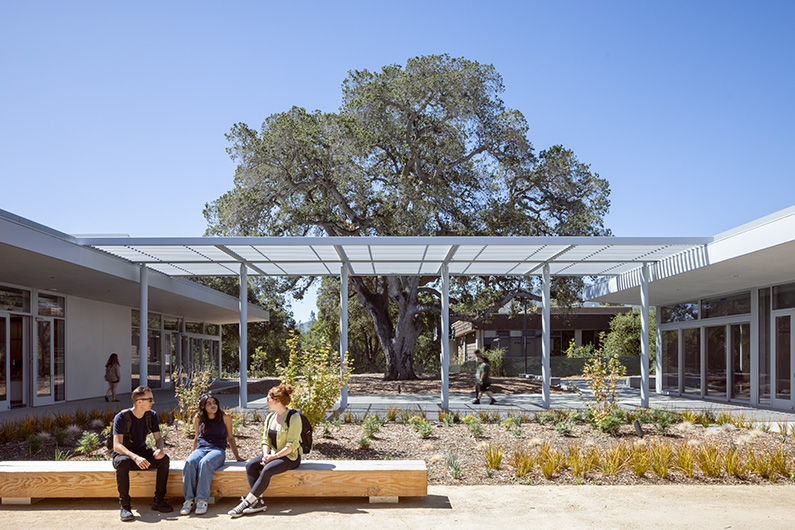
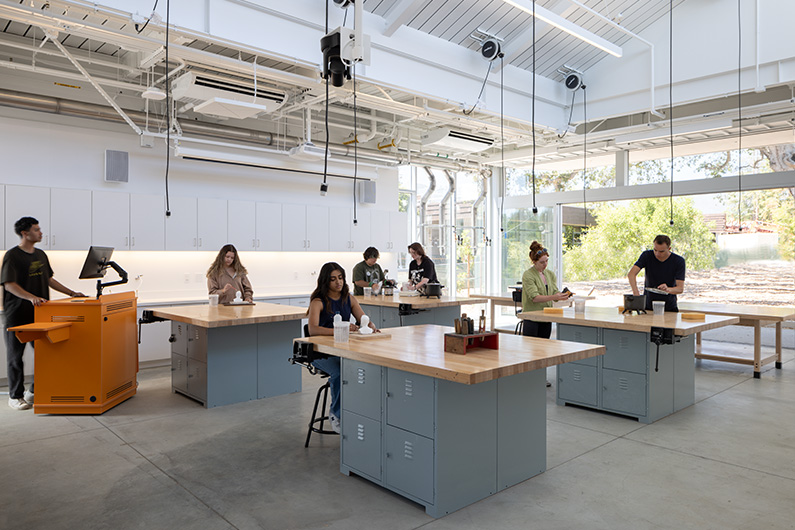
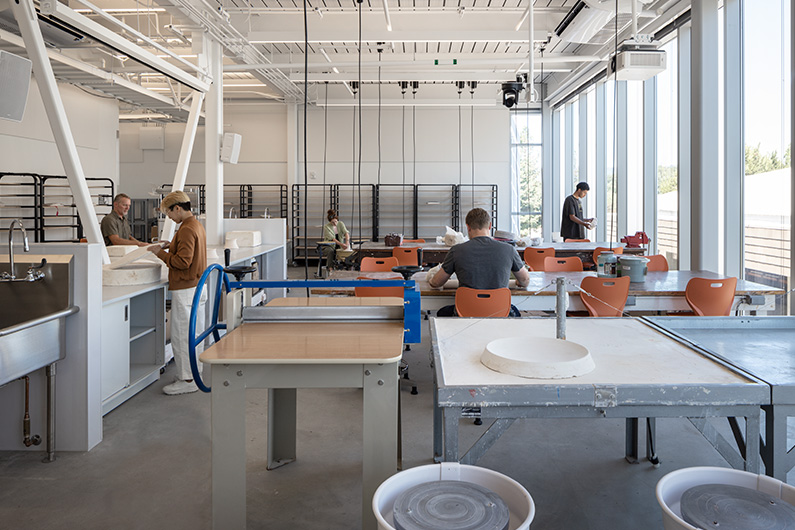
Transparency and visibility are central to the building’s design, allowing the creative process itself to engage the campus and broader community. Alongside dedicated studios for painting, digital media, sculpture, and ceramics, the facility features a fully equipped metal and woodworking workshop, complete with welding facilities and an expansive outdoor work yard, supporting hands-on exploration across disciplines.
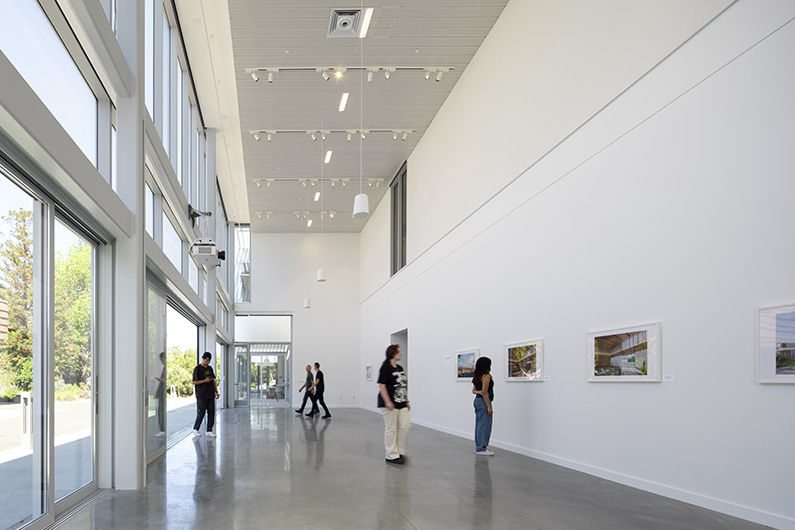
A striking double-height gallery space provides a prominent platform for showcasing student work, from traditional two-dimensional and three-dimensional pieces to new media installations and performance art, reinforcing a culture of creativity, collaboration, and shared inspiration. The master plan envisions the Visual Arts Building as the first phase in a series of projects to create an arts quarter within the campus, using the gallery as a beacon to draw in students and visitors to witness the incredible works of art in action.
Our new state-of-the-art Visual Arts Building has radically changed our student experience at West Valley College. With its clean lines and large light filled rooms it is a physical representation of the esteem in which the creative disciplines are held on our campus. The large windows and glass walls bring nature close to the studios, creating a serene space for inspiration and art-making.
Shannon Mirabelli-Lopez, Dean, Bill & Leila Cilker School of Art & Design
West Valley College
At TLCD, we build community through collaborative, inspired design.
This is made possible by the efforts of our trusted design and construction partners:
Montgomery High School Classroom Building: Wright Contracting, ZFA Structural Engineers, Guttmann & Blaevoet Consulting Engineers, Brelje & Race Consulting Engineers, Quadriga Landscape Architecture, Cromb Associates, Grzebik Design Group (Acoustic), SolData Energy Consulting, John A. Raeber, Technical Imagery Studios.
SRJC Burbank Auditorium: Mark Cavagnero Associates, Wright Contracting, ZFA Structural Engineers, Guttmann & Blaevoet Consulting Engineers, Brelje & Race Consulting Engineers, Quadriga Landscape Architecture, The Shalleck Collaborative, SolData Energy Consulting, TBD Consultants, Chales M. Salter Associates, Engineered Fire Systems, O’Mahony & Myer, Tim Griffith (Photographer).
West Valley College Visual Arts Building: Gilbane (CM), Mark Cavagnero Associates, IDA Structural Engineers, Guttmann & Blaevoet Consulting Engineers, CSWST2 (Civil), Quadriga Landscape Architecture, TBD Consultants, In Balance Green Consulting, Chales M. Salter Associates, Engineered Fire Systems, O’Mahony & Myer, Henrik Kam Photography.